
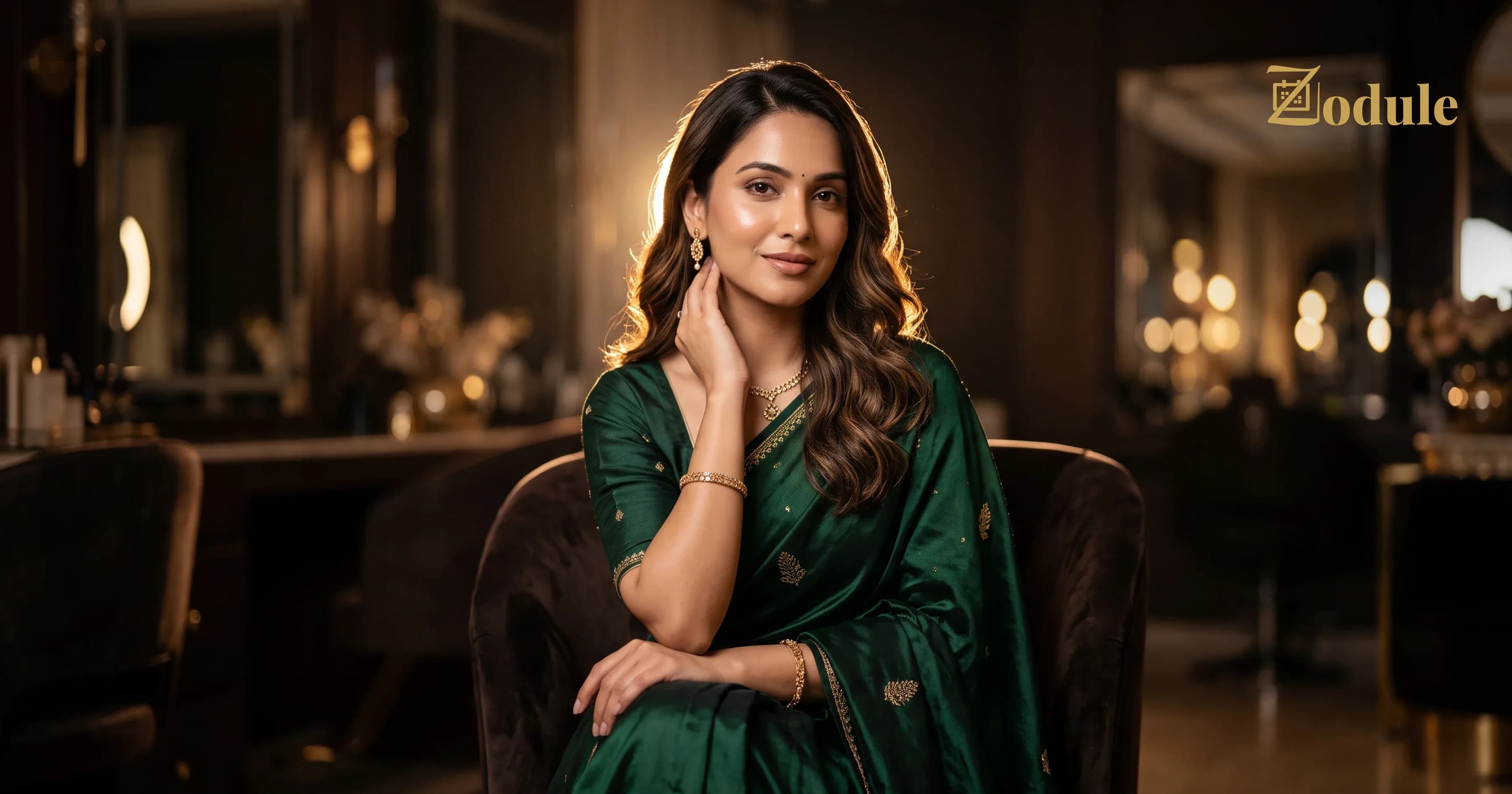
Balayage vs Highlights vs Global Colour vs Ombre: Cost, Upkeep and What Suits Indian Hair
By Zodule Editorial · 6/15/2026 · 8 min read
The ₹7,000 Mistake That Changed How I Think About Hair Colour
She walked into the salon asking for "something like Deepika's hair in that one interview." Three hours and ₹7,000 later, she walked out with brassy orange ends that looked nothing like a lived-in look and everything like a colour correction nightmare waiting to happen. I've seen this play out dozens of times, a client picks a technique based on an Instagram screenshot, the colorist skips the porosity test, and within two weeks, the ladder effect kicks in and everyone's unhappy.
Here's the thing: Indian hair, typically Type 1B to 2A, high melanin, often on the drier side, doesn't behave the way most Western colour guides assume. And that gap between expectation and reality? That's where money gets wasted.
By the end of this guide, you'll know exactly which colouring technique matches your hair type, budget, and maintenance tolerance, so you never walk out of a salon regretting the spend.
Before You Book: The 30-Second Readiness Check
Two things need to be locked down before you even think about technique:
Your budget ceiling, not just for the first session, but for the next 6 months of upkeep.
Your honest maintenance bandwidth. Are you someone who'll show up for a glossing appointment every 8 weeks, or will you ghost your colorist for 4 months?
Stop/Go test: Can you say, in one sentence, "I want [this look], I can spend [₹X] every [Y weeks], and my hair is currently [virgin/coloured/damaged]"? If yes, keep reading. If not, figure that out first.
The Core Breakdown: Four Techniques, Head to Head
Phase 1: Understanding What You're Actually Paying For
Let's cut through the noise. Here's what each technique does, what it costs in India right now, and how it behaves on Indian hair specifically.
Global Colour is full-coverage, root-to-tip saturation. It's the most affordable entry point at ₹2,500–₹5,000 and gives you uniform colour. The visual checkpoint here is simple: under salon lights, you should see zero patchiness and consistent saturation from root to tip. If you spot uneven density when the hair is wet, stop. The application was poor.
But global demands the most upkeep. You're looking at root touch-ups every 3–4 weeks because Indian hair grows fast and dark regrowth against a lighter shade is brutal. That's potentially 12–15 salon visits a year. Do the math on that.
Highlights use foil separation to create defined, structured strands of lighter colour. Partial highlights start around ₹3,000+, full sets at ₹5,000+. The look is sharp, contrasty, great if that's your aesthetic. The verification here: evenly spaced strands with no colour bleed between foils. From the side, each lightened section should look intentional, not accidental.
The friction? Highlights on Indian hair grow out harshly. Without a root smudge at the regrowth zone, you'll see a hard horizontal line within three weeks. That's the ladder effect, and it's the number one complaint I hear from highlight clients.
Balayage is free-hand paint, no foils, no rigid pattern. It's the priciest upfront at ₹5,000–₹8,000, but here's the trade-off that most people miss: maintenance drops to every 8–12 weeks, and even then, it's usually just a glossing session, not a full recolour. The visual checkpoint is a soft gradient transition from dark root to lighter end with absolutely no visible horizontal line. The ends should look glossy, not straw-like.
For Indian hair, balayage is where I lean hardest, when done correctly. That "when" is doing a lot of heavy lifting, though. More on that in a second.
Ombre creates a more dramatic transition, dark on top, noticeably lighter from mid-length down. The price range overlaps with balayage. The visual checkpoint: a blended transition point about 2–3 inches from the root that doesn't look like a stripe.
Here's my honest take on ombre for Indian skin tones: it clashes more often than it works. The stark contrast between dark roots and light ends can look disconnected unless the colorist is extremely skilled at blending. And on dry Indian hair, the bleaching required for that dramatic shift often triggers a dryness spiral, breakage, not just colour change.
Verification for this phase: Look at your shortlisted technique. Can you accept the maintenance frequency and the cost per visit for at least 6 months? If not, reconsider.
Phase 2: The Indian Hair Variables Nobody Talks About
This is where generic guides fall apart. 70% of Indian women report hair dryness after double-process colouring. That stat alone should make you pause before requesting platinum blonde anything.
Indian hair's high melanin content means it lifts to orange, not yellow. Every colorist knows this, but not every colorist does proper ash correction afterward. If your ends look warm and coppery under bright light instead of cool and beige, the toning step was skipped or rushed. That's your verification check, and it's non-negotiable.
The other variable: cuticle resistance. Indian hair often resists colour uptake, which tempts some colorists to leave bleach on longer. Bad move. The fix isn't more time, it's technique. A heat cap with a warm towel for 15 minutes accelerates lift without extra chemical exposure. If your colorist doesn't mention a bond builder mixed into the bleach for any lightening service, ask why.
Visual checkpoint: After processing, rub a single strand between your fingers. Smooth and silky means the cuticle is intact. Rough or sticky means cuticle damage has occurred, and you need to stop further chemical work immediately.
Phase 3: Picking Your Technique : The Decision Framework
Forget the Instagram comparison. Use this:
You want bold, uniform transformation and can commit to monthly salon visits → Global colour. Tone-on-tone options let you add depth without lifting, which is gentler.
You want defined contrast, work in a creative field, and don't mind touch-ups every 6–8 weeks → Highlights. Ask for babylights if you want subtlety over chunky highlights.
You want a low-maintenance, natural-looking result and can invest more upfront → Balayage. Insist on a root smudge and a heat shield for every styling session afterward.
You want drama and your hair is in excellent health → Ombre. But only if your colorist does a porosity test first and uses a sectioning grid for even application.
The Ugly Truth: What Goes Wrong and the Weird Fixes That Actually Work
Problem | The Weird Fix | Why It Works |
|---|---|---|
Brassy orange ends after balayage | Pre-softening with a diluted vinegar rinse before bleaching | Opens cuticles gently so bleach lifts more evenly through high-melanin hair |
Harsh ladder line at roots (3 weeks post-colour) | Shadow root — apply a 1-level darker tone at root, blend down 2 inches | Creates a soft buffer zone that mimics natural regrowth |
Breakage after ombre on dry hair | Mix a bond builder (like Olaplex No.1) directly into the bleach before application | Reinforces protein bonds during the most damaging step |
Patchy ombre from uneven free-hand paint | Divide hair into 4 quadrants, paint in 1-inch horizontal strips | Removes randomness from the application; consistent coverage |
Colour won't lift on resistant strands | Use a plastic cap + warm towel for 15 minutes | Gentle heat opens cuticles without adding more chemical |
These aren't textbook solutions, they're what experienced colorists actually do in the chair when things aren't going to plan.
Finding a Colorist Who Gets Indian Hair? The technique matters, but so does who's holding the brush. If you're tired of explaining your hair type to every new salon, Zodule curates top-rated salons and colorists across Indian metros, so you can book with confidence, knowing the person behind the chair understands high-melanin hair, ash correction, and everything we've just covered. Book beautifully, skip the guesswork.
FAQs
How long does balayage actually last on Indian hair?
A well-executed balayage with proper root smudge lasts 8–12 weeks before needing a glossing refresh. Because the technique avoids hard lines at the root, regrowth blends naturally, making it the lowest-maintenance option for Indian hair textures. Budget around ₹2,000–₹3,000 per glossing session.
Is global colour damaging for dry Indian hair?
Tone-on-tone global colour (no lifting involved) is relatively gentle. The damage comes from lightening, any service requiring bleach on already-dry hair risks a dryness spiral. Always ask your colorist about a scalp sensitivity check and bond builder inclusion before proceeding.
Can I switch from highlights to balayage?
Yes, and many colorists recommend it. Your existing highlights can be blended into a balayage pattern during your next appointment. The key is ensuring no bleach overlaps onto previously lightened sections, which causes cuticle damage. A skilled colorist will map your existing colour before touching a brush.
What's the real monthly cost of maintaining coloured hair in India?
Global colour runs roughly ₹2,500–₹5,000 monthly. Highlights average ₹3,000–₹5,000 every 6–8 weeks. Balayage is the most budget-friendly long-term, one upfront investment of ₹5,000–₹8,000, then glossing every 2–3 months. Don't forget to factor in a quality heat shield and colour-safe shampoo, which add ₹500–₹1,000 monthly.
So, what's your one-sentence colour goal? Figure that out, find a colorist who'll do the porosity test before picking up bleach, and you're already ahead of 90% of first-time colour clients. The rest is just chemistry and good hands.
Your next colour appointment should feel like an experience, not a gamble. Browse top-rated salons on Zodule and book with colorists who know Indian hair inside out.
Zodule Editorial