
D-Tan vs Tan-Removal Facial vs Body Polishing: The Best Way to Beat an Indian Summer Tan
By Zodule Editorial · 6/17/2026 · 8 min read
Last April, I spent three weeks recommending a basic cleanup facial to a client in Pune who kept coming back with the same patchy, grayish neck. Three weeks. It wasn't until I actually assessed her melanin load properly that I realized the issue, she didn't need a cleanup. She needed targeted pigmentation reversal, and the charcoal scrub she was using at home was actively making things worse by wrecking her barrier integrity.
That's the thing nobody tells you about Indian summer tan. It's not one problem. It's three problems wearing a trench coat, and most people throw the wrong solution at it because the terminology is a mess.
By the end of this guide, you'll know exactly which treatment, D-Tan, tan-removal facial, or body polishing, matches your specific skin situation, and you'll have a week-by-week routine that actually produces visible results.
Before You Start: The 30-Second Readiness Check
You need two things locked down before any of this matters:
Sunscreen compliance. If you're not wearing SPF 50+ daily and reapplying every 3–4 hours outdoors, stop here. Every de-tan product or treatment you use will be undone by tomorrow's UV exposure. This isn't optional, it's the foundation.
Know your goal in one sentence. "I want my neck and arms to match my face again" is different from "I want overall radiance." The first is pigmentation reversal. The second is dullness correction. Different problems, different protocols.
Stop/Go test: Can you confirm you've worn sunscreen consistently for at least 3 days? If yes, go. If no, start there. Seriously.
Phase 1: Understanding What You're Actually Dealing With
Here's where most people get confused. D-Tan packs, tan-removal facials, and body polishing sound interchangeable. They're not.
D-Tan is a targeted chemical exfoliation protocol. The good ones contain Kojic Acid, AHAs, or Vitamin C, ingredients that work on tyrosinase inhibition. They're specifically designed to interrupt melanin production and accelerate the shedding of pigmented dead cells. You apply, wait 15–20 minutes, and wash off. That's it. No massage, no elaborate steps.
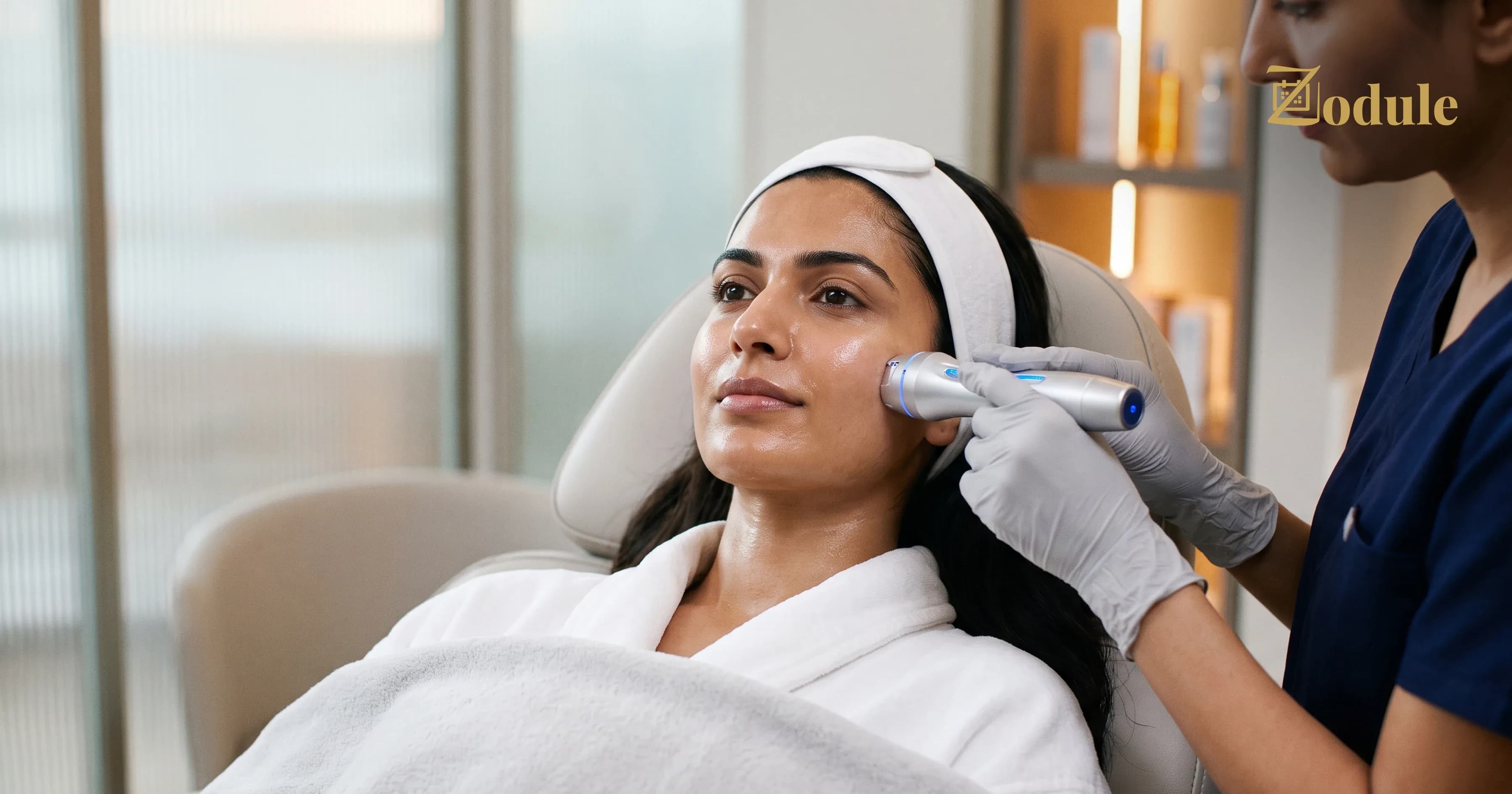
Tan-removal facials are multi-step salon treatments. They typically combine chemical exfoliation with steam, extraction, a brightening serum, and sometimes a peel-off mask. The advantage? A trained professional controls the intensity. The disadvantage? One session won't cut it, and the quality varies wildly between salons.
Body polishing is primarily physical abrasion, scrubs, sometimes with granulated sugar or walnut shell, followed by moisturization. It's great for dullness correction and smoothing texture on arms, legs, and back. But here's the friction: it does almost nothing for deep tan because it only addresses the surface layer. It won't touch the melanin sitting in deeper epidermal layers.
Visual checkpoint: After a proper D-Tan application, your skin should shift from a dull, grayish cast to a slightly pinkish, radiant tone. If you see redness or feel stinging beyond mild tingling, the product is too aggressive for your current barrier integrity.
Verification: Run the wet finger test, rub a damp finger across the treated area. Smooth and slightly slippery means successful exfoliation. Gritty or rough means you need another gentle pass.
Phase 2: Matching Treatment to Skin Situation
This is where I see the most mistakes, so I'm going to be blunt.
If your tan is less than 2 weeks old and mild: A D-Tan pack at home, twice a week, combined with a daily Vitamin C serum, will handle it. Tan naturally fades in 7–10 days when UV exposure stops, you're just accelerating the timeline. Use yogurt-based masks for added lactic acid content, but here's a nuance most DIY guides skip: older, more sour yogurt has significantly higher lactic acid concentration than fresh yogurt. The stuff that's been sitting in your fridge for 3–4 days is actually better for this purpose.
If your tan is 3+ weeks old and uneven: Book a professional tan-removal facial. You need controlled chemical exfoliation, the kind where someone monitors your skin's response in real time. A good aesthetician will adjust acid concentration based on what they see. One session shows improvement; expect 3–4 sessions spaced 10 days apart for full sun damage repair.
If your concern is rough texture on arms and legs with mild darkening: Body polishing works here. But, and this is the part that gets left out, follow it with a D-Tan body oil applied on post-shower damp skin. The polishing removes the dead cell barrier, and the oil's active ingredients penetrate deeper. Without this combination, you're just making skin temporarily smooth without addressing pigment.
Visual checkpoint: After a tan-removal facial, the skin should feel light and fresh, not tight. Tightness signals over-stripping. After body polishing, arms and legs should look visibly more luminous under natural light, with an even texture when you run your palm across the skin.
Verification: The 7-day fade test. If you don't see noticeable improvement after 7–10 days of consistent routine (including sunscreen), the treatment intensity needs to go up, or your sunscreen game has gaps.
Phase 3: The Weekly Routine That Actually Works
Here's what I recommend to clients dealing with moderate Indian summer tan across face and body:
Daily (non-negotiable):
SPF 50+ sunscreen, reapplied if outdoors past 3 hours
Vitamin C or Niacinamide serum on face, morning
D-Tan body oil on post-shower damp skin, this is critical, dry skin absorbs poorly
Twice weekly:
Body exfoliation with a gentle AHA-based scrub (not charcoal, not aggressive walnut shell)
D-Tan face pack, apply evenly, massage for 15–20 minutes, not the 2-minute rush most people do
Every 10–14 days:
Professional tan-removal facial if budget allows
Verification: Do a redness scan after every exfoliation session. Any red streaks or irritation means you've crossed from exfoliation into damage. Switch to chemical exfoliation only and let the skin recover for 3–4 days.
The Ugly Truth: What Nobody Warns You About
Problem | The Weird Fix | Why It Works |
|---|---|---|
Tan persists after 1 week of products | Strict "Sunscreen First" rule — SPF 50+ before any de-tan product, every single day | New UV exposure re-tans skin faster than products can reverse it |
Skin feels raw and red after scrubbing | Stop all physical abrasion for 3 days; switch to AHA-based chemical exfoliation only | Harsh scrubs compromise barrier integrity, triggering rebound pigmentation — your skin makes more melanin to defend itself |
Tan looks patchy after DIY mask | Massage yogurt/besan paste for 15–20 minutes, not 2 — ensure even lactic acid penetration across the area | Short application times mean uneven acid contact |
No glow even after de-tan treatment | Add a peel-off mask after washing the scrub to lift the remaining dead layer | Some dead cells are too adherent for wash-off products alone |
The rebound pigmentation issue is the one that gets people. I've seen clients who scrubbed daily with those aggressive charcoal face washes and ended up darker than when they started. The skin perceived the abrasion as injury and ramped up melanin production as defense. It's a cycle that takes weeks to break once it starts.
Finding the Right Professional Makes the Difference You've figured out what your skin needs, but with tan-removal facials, the quality of the practitioner matters as much as the protocol. A skilled aesthetician adjusts acid concentration and technique based on your skin's live response, which no at-home product can replicate. If you're in a metro city and want to skip the guesswork of finding a vetted salon, browse curated wellness studios on Zodule, they list only premium, reviewed professionals so the booking itself feels like self-care.
FAQs
How long does it realistically take to remove an Indian summer tan?
Expect 7–10 days for mild tan with consistent routine, and up to a month for deep, stubborn pigmentation. There's no overnight fix, anyone claiming otherwise is selling you something. Twice-weekly exfoliation paired with daily SPF is the baseline that makes everything else work.
Can I do D-Tan and body polishing on the same day?
Yes, but sequence matters. Do body polishing first to clear the dead cell layer, then apply D-Tan actives on the freshly exfoliated skin for deeper penetration. Skip this order and you're wasting product on cells that are about to slough off anyway.
Is a tan-removal facial worth the salon price over DIY?
For face, yes, especially if your tan is older than 3 weeks or patchy. Professional-grade chemical exfoliation is calibrated differently than consumer products. For body, a good at-home routine with quality products and expert guidance through Zodule's listed studios gives you the best of both approaches.
Why does my tan come back even after a facial?
Sunscreen dependency is the answer 90% of the time. De-tan treatments remove existing pigment, but without daily SPF 50+ and reapplication, fresh UV exposure triggers new melanin production within hours. The treatment didn't fail, the aftercare did.
Your tan isn't permanent. But the approach you take to remove it determines whether you get lasting glow enhancement or a frustrating cycle of scrub-and-repeat. Pick the right treatment for your specific situation, respect the timeline, and, I can't say this enough, wear your sunscreen like it's the most important step. Because it is.
Zodule Editorial