
What to Expect at Your First Aesthetic Treatment Appointment: A No-Judgment Guide
By Zodule Editorial · 5/27/2026 · 8 min read
She sat in the waiting room with a clean face, no makeup, phone buzzing with three different tabs open, one on "Botox gone wrong," one on "best dermatologist near me reviews," and one WhatsApp thread where her friend kept saying, "Just relax, it's like 20 minutes." Her palms were sweating. Not because she was unsure about wanting the treatment. She was unsure about everything else.
That's the part nobody talks about. The wanting is easy. The not-knowing-what-to-expect part? That's where most people spiral.
This guide walks you through exactly what happens before, during, and after your first aesthetic treatment appointment, so you can walk in informed, walk out confident, and skip the anxiety spiral entirely.
Before You Book: The Pre-Flight Check
Here's the thing most "first timer" guides skip: readiness isn't about courage. It's about clarity.
Before you even look at clinic websites, lock these down:
Your goal, in one sentence. Not "I want to look better." Something like, "I want to reduce the fine lines around my mouth" or "I want to address uneven skin texture on my cheeks." If you can't say it in one sentence, you're not ready to book, you're ready to research.
Your medical history, written out. Medications, allergies, supplements, previous procedures (cosmetic or otherwise). Clinicians need this for a proper risk assessment, and forgetting to mention blood-thinning painkillers like ibuprofen is one of the most common causes of unexpected bruising after injectables.
Your aesthetic history. Have you had filler before? Laser? Chemical peels? Even that one microneedling session two years ago counts. Prior treatments change the treatment plan.
Stop/Go test: Can you describe your goal in one sentence and list your current medications from memory? If yes, you're ready. If not, spend 15 minutes getting that sorted before you dial a single clinic.
Phase 1: Choosing the Right Clinic (Not Just the Prettiest Instagram)
This is where credential confusion trips people up, especially in India, where marketing can outpace regulation.
What to do:
Verify your doctor on the NMC Indian Medical Register. Not negotiable. If the clinic can't provide this, walk away.
Check for NABH accreditation (or JCI accreditation for internationally benchmarked facilities). These aren't just badges; they signal process discipline around safety, hygiene, and patient protocols.
Look for professional affiliations like IAAPS. Google them independently, don't just trust the logo on the website.
Visual checkpoint: You should be able to find the doctor's registration number on the NMC portal within a few minutes. If you can't, that's a red flag, not a minor inconvenience.
Verification: If the clinic cannot show you a credential verification pathway for both the doctor and the facility, stop. Do not rely on branding alone.
One thing I've noticed: people spend more time reading restaurant reviews than verifying clinic credentials. And I get it, it feels awkward to "interrogate" a place you're about to pay for a service. But this is your face. Your body. The awkwardness is worth it.
Phase 2: The Consultation (This Is Where the Real Work Happens)
A good consultation doesn't feel like a sales pitch. It feels like a conversation where someone's actually listening.
What should happen:
The clinician takes a full medical and aesthetic history. Not a quick glance at a form, an actual conversation about your meds, allergies, lifestyle, and what you've tried before.
They discuss realistic expectations. This is the single biggest failure mode in aesthetics. The patient wants one thing, the clinician plans another, and nobody realizes the gap until after treatment. Bring reference photos. Ask directly: "Is this achievable for my skin/face/body?"
They walk you through side-effects and complications in plain language. Not legal jargon buried in a consent form.
They explain the informed consent process. You should understand what you're agreeing to, not just sign because it's in front of you.
Visual checkpoint: If the clinician jumps straight to pricing or treatment without asking about your medical history, motivations, and concerns, the intake is incomplete.
Verification: Can you, after the consultation, explain the procedure, its risks, and the expected outcome to a friend in your own words? If not, go back and ask more questions. No good practitioner will judge you for that.
The friction warning nobody mentions: Cost surprises. Facility fees, anesthesia charges, follow-up visit costs, and touch-up policies can all sneak up on you. Demand an itemized written quote before proceeding. If the written estimate doesn't separate procedure, facility, anesthesia, and follow-up costs, price transparency is incomplete, and that's a problem.
Phase 3: The Day Of (What Actually Happens in the Room)
You've done the homework. You've verified credentials. You've had the consultation. Now it's treatment day.
Pre-treatment instructions matter more than people realize. The standard protocol:
Arrive with a clean face, no makeup, no serums, no SPF. Products on the skin can interfere with the procedure and cause post-treatment irritation.
Skip alcohol for at least 24 hours before.
Avoid ibuprofen and other blood-thinning painkillers (this directly affects bruising risk, confirm the timeline with your clinician).
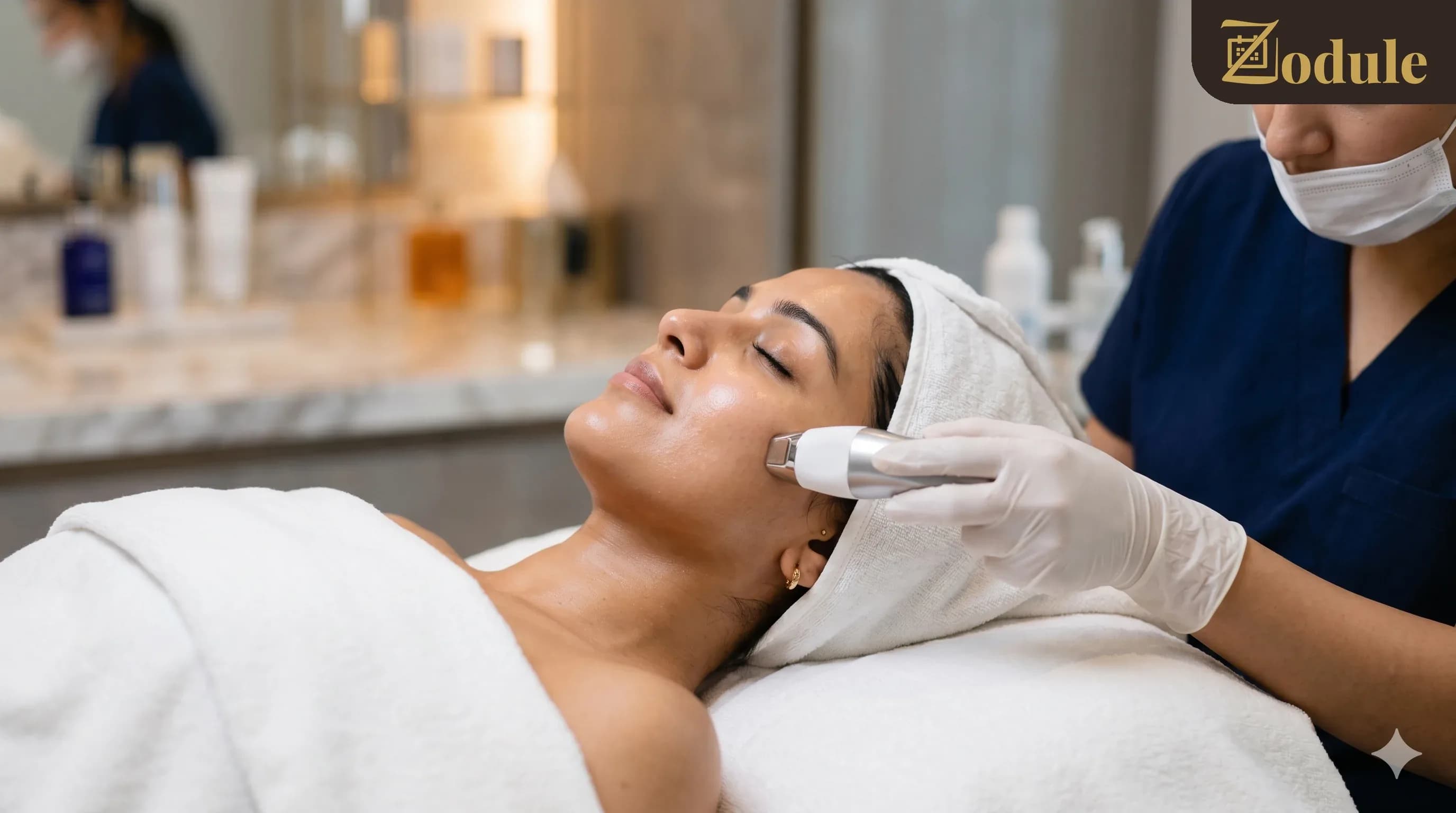
What it looks and feels like: For most injectable procedures, the treatment itself can be around 20 minutes depending on the area. It's not the dramatic, hours-long ordeal you might be imagining. There may be some pressure, a slight pinch, and your clinician should be narrating what they're doing as they go.
Visual checkpoint: The treatment room should feel clinical, not chaotic. Sterile packaging opened in front of you. Gloves on. No rushing.
Verification: Did the clinician confirm your treatment plan one more time before starting? Did they ask if you have any last questions? If both happened, you're in good hands.
Phase 4: Aftercare and the Days That Follow
Here's the part where most people drop the ball, and then blame the treatment.
Aftercare isn't optional. It's half the result.
Avoid direct sun on the treated area. Seriously.
Don't apply makeup or heavy products until your clinician says it's okay.
Don't touch, press, or massage the area unless specifically instructed to.
Know your downtime. For laser or deeper peels, plan for visible recovery. Arrange transport if needed. Tell your calendar the truth.
The ugly truth: Recovery often takes longer than the "24-48 hours" that gets tossed around casually. Bruising, redness, and swelling are normal, but they're also visible, and most people underestimate how that feels socially. Give yourself grace and a few days of low-key plans.
Schedule a follow-up visit, even if you think everything looks fine. Results evolve over days and weeks, and a check-in lets the clinician confirm the outcome is tracking as expected.
The Troubleshooting Table Nobody Gives You
Problem | The Weird Fix | Why It Works |
|---|---|---|
Unexpected bruising after injectables | Stop OTC painkillers (ibuprofen, aspirin) before the appointment, confirm timeline with your clinician | These are blood-thinning; they increase bruising risk significantly |
"Natural" result looks different than expected | Bring reference photos to the consultation; ask what's achievable vs. aspirational | Closes the expectation gap before treatment, not after |
Post-treatment irritation or breakout | Come with a completely clean face, no products, no SPF, nothing | Residual product interferes with treatment and healing |
Recovery takes way longer than promised | Follow the aftercare protocol exactly: no sun, no pressure, no makeup | Compliance is the real bottleneck, not the procedure |
Surprise charges on the bill | Request an itemized written quote before consenting | Separates procedure, facility, anesthesia, and follow-up costs |
Ready to book your first appointment with confidence? Finding a verified, quality clinic shouldn't require a research project. Zodule curates top-rated salons and aesthetic studios across India’s major metros, so you can spend less time verifying credentials and more time looking forward to the experience. Book beautifully.
FAQs
How long does a first aesthetic treatment appointment actually take?
The consultation can run 20–45 minutes depending on your history and questions. The treatment itself, especially injectables, is often around 20 minutes. Budget 60–90 minutes total for your first visit, including paperwork and aftercare instructions.
What should I bring to my first aesthetic consultation?
Bring a written list of current medications, supplements, and allergies. Include your aesthetic history, any prior cosmetic treatments, even minor ones. Reference photos of your desired outcome help the clinician align on realistic expectations.
How do I verify if a clinic in India is legitimate?
Check the doctor's credentials on the NMC Indian Medical Register. Look for NABH or JCI accreditation for the facility. Professional affiliations like IAAPS add another layer of credibility. Don't rely on social media presence alone.
Can I wear makeup to my aesthetic treatment appointment?
No. Arrive with a clean face, no makeup, serums, or sunscreen. Products on the skin can interfere with the procedure and increase the chance of post-treatment irritation. Your clinic should mention this in pre-treatment instructions.
Your first aesthetic appointment doesn't have to feel like a leap of faith. It should feel like a well-informed decision, one where you know what's happening, why it's happening, and what comes next. And if a clinic ever makes you feel judged for asking too many questions? That's not your clinic.
Explore curated aesthetic studios near you on [Zodule](https://zodule.ai), where every booking is backed by quality you can trust.
Zodule Editorial